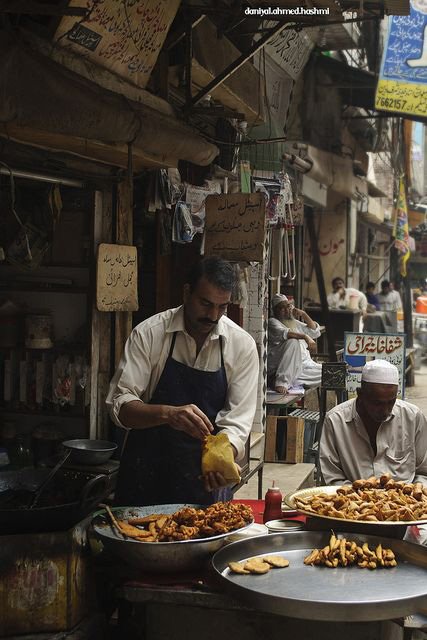
It began as a note in the back of a diary — a stray idea about the food we grew up eating and almost never found written down. It lingered, changed shape over too many cups of coffee, and eventually became a room: bread going into the oven, chai on the boil, pans knocking, breakfast turning slowly into dinner.
The walls borrow from mid-century advertising — the great cities of the Frontier drawn the way they were once sold. The map behind the pass remembers a time before check-posts and visas, when the road from Kabul to Karachi to Delhi changed its language and its spicing by degrees rather than at a gate.
The room itself is drawn around a hearth: full-length windows, blue and white floor tile, a particular weave on the banquettes, and an open kitchen you can hear from the far table. Picture a village kitchen anywhere along that road, family crowded in, bread coming out, lamb that has been in the tandoor since morning. That is roughly the idea.