Hands working dough at the Sthan bakery counter

– Journal –

Notes from the kitchen

Dishes with longer stories than menus allow, the tea stall we keep trying to rebuild indoors, and the idea we borrowed the name from.

– Journal Entry –

Chai ki Dukan

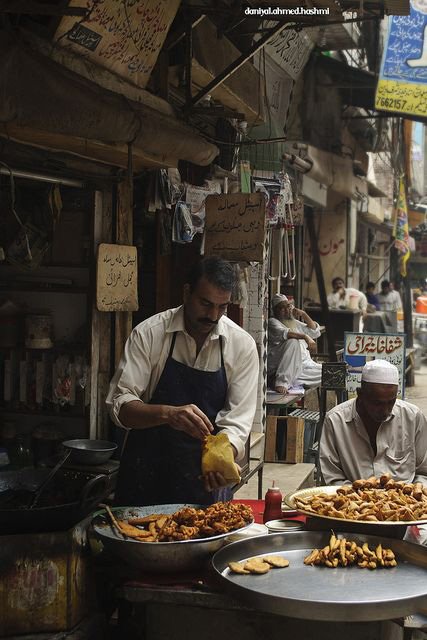
Chai rhymes with pie and means tea across half the world. In the places our cooking comes from you can be a long way from a shop or a clean tap and still be handed a glass of it within a minute of sitting down.

There is an old enamel sign — a moustachioed young man mid-sip — that somebody’s grandfather can always quote from memory: this fellow and his brother, always drinking tea.

Nothing quite replaces the first smell of it: boiled long, poured from a height, handed over hot enough that you hold the glass by its rim. Dudh patti tastes of unhurried conversation; kahwa of somewhere colder and further north. We keep both going all day.
Food & Drink

Masala chai poured into a glass at the counter
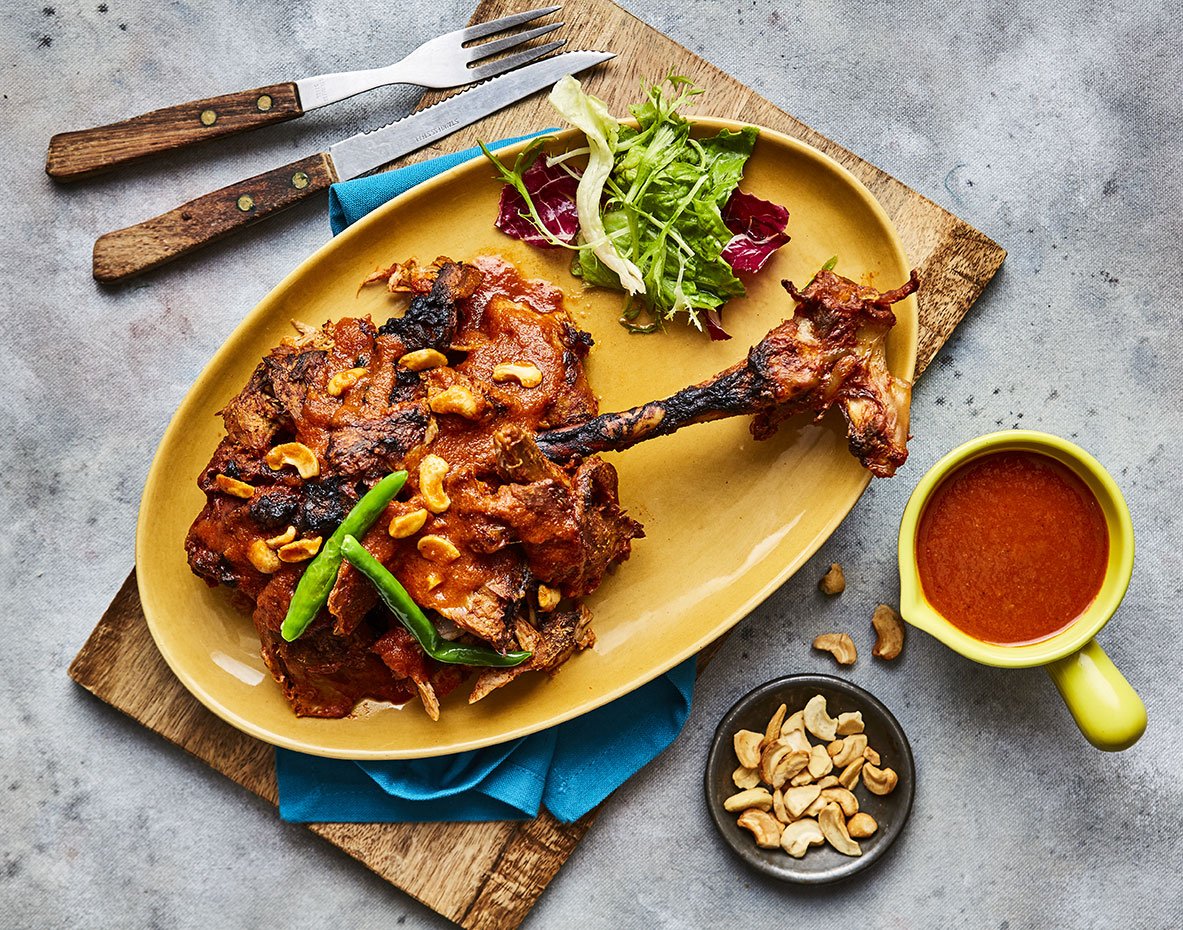
Raan Irani — a whole leg of lamb, roasted and carried to the table
Whole leg of lamb, marinated overnight in Kabuli spices, slow roasted.

– Journal Entry –

Raan Irani

Our raan carries a story. Around 300 BC, Alexander took the Indian king Porus in battle and asked how he wished to be treated in captivity. Like a king, Porus said. Alexander released him, and the banquet held to mark the new friendship is where Sikandari Raan is said to have first been served.

Traditionally the leg was wrapped in cloth, buried in a pit and covered over with earth and coals — several hours of low, patient heat that leave the meat subtle rather than loud.

Ours is the one indulgence on the menu: a whole leg of lamb, marinated overnight in Kabuli spices, braised and then finished in the tandoor. It arrives whole and leaves in pieces. Order it for the table, and order extra bread.

Food & Drink

– Journal Entry –

Food Beyond Borders

Food is the substrate of everything: survival first, then memory, then company. It marks us out from one another and, just as reliably, hands us the one thing we have in common.

Cooking also travels in ways people are not always allowed to. A recipe crosses a border in somebody’s hands and arrives slightly altered — a different bread, a longer cook, one more spice in the pot. Follow it backwards far enough and the map stops looking much like a map.

That idea is where our name comes from, and it is the reason the wall behind the pass carries a map with no check-posts drawn on it.

The Story Behind Sthan

The map wall at Sthan, drawn without borders

– Why Sthan? –

What the name actually stands for — and why we keep describing a tea stall when people ask.